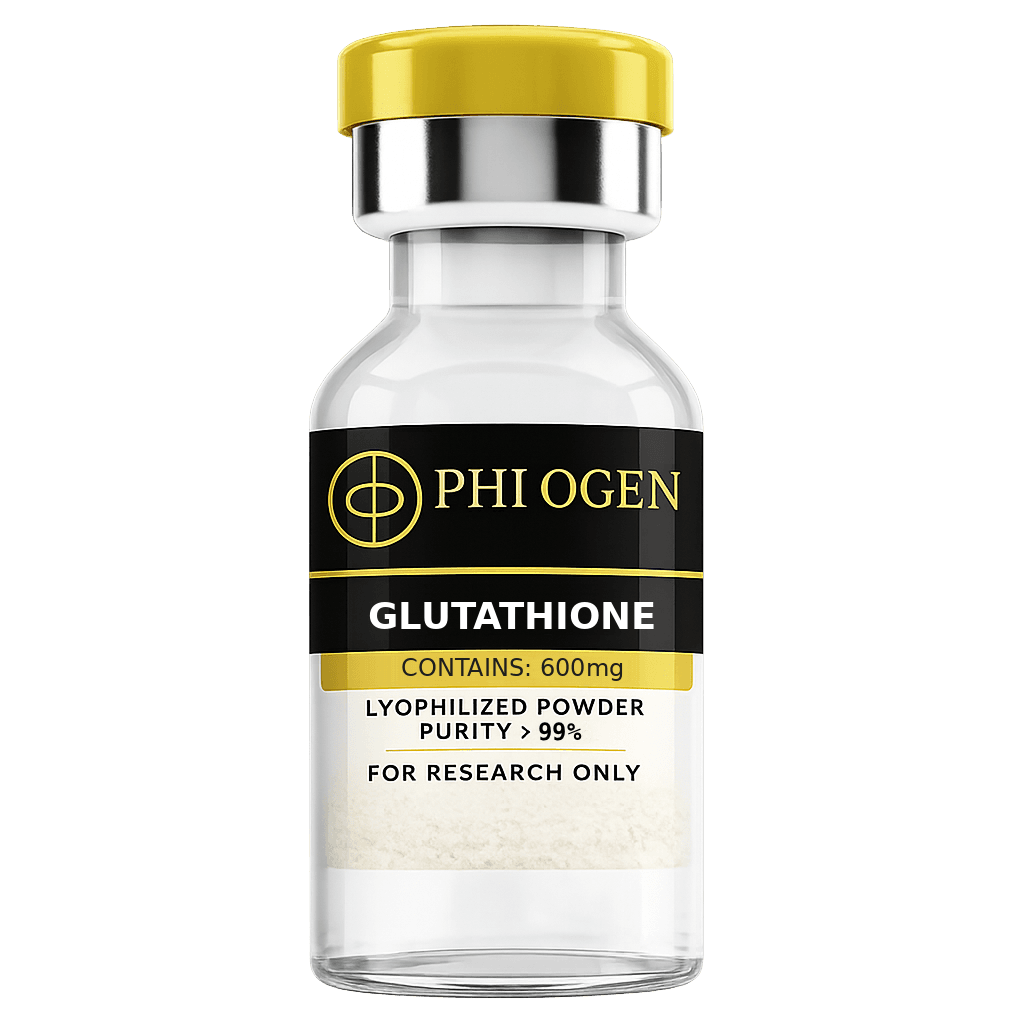
Glutathione 600mg
Compounds used in longevity and anti-senescence research.
Glutathione is the major intracellular antioxidant tripeptide (γ-Glu-Cys-Gly). Injectable glutathione research centers on whether parenteral delivery raises tissue glutathione pools more efficiently than oral precursor approaches.
Proposed mechanism
Glutathione buffers oxidative stress through the GSH/GSSG redox cycle and participates in phase-II detoxification via glutathione-S-transferases. Oral glutathione is largely hydrolyzed; parenteral delivery bypasses this route.
Research highlights
- Master intracellular antioxidant (tripeptide)
- Available in 200, 600, and 1500 mg research vials
- Studied in redox-biology, hepatology, and skin research
- Parenteral delivery avoids gut hydrolysis
Research protocol notes
Reconstitute under sterile technique with bacteriostatic water. Typical volumes range from 1–3 mL depending on the target working concentration. Swirl gently — do not shake — to avoid peptide shearing.
Stacking and comparative studies
Typically studied alone.
Handling and storage
Lyophilized powder is stable at ambient shipping temperatures. Once reconstituted with bacteriostatic water, store at 2–8 °C and use within 28 days. For long-term storage of unreconstituted vials, freeze at −20 °C and protect from light.
Frequently asked
Why inject glutathione instead of taking it orally?
Oral glutathione is largely hydrolyzed before absorption. Parenteral routes bypass this and are the focus of research on tissue-level GSH elevation.
What are the three amino acids?
γ-glutamate, cysteine, and glycine. The γ-linkage (instead of α) makes glutathione resistant to most peptidases.
What is GSH/GSSG?
GSH is reduced glutathione. GSSG is oxidized glutathione (glutathione disulfide). The ratio is a standard redox-state readout.
Why 200, 600, and 1500 mg?
Research protocols vary in dose and duration. Larger vials are more cost-efficient per mg for longer studies.