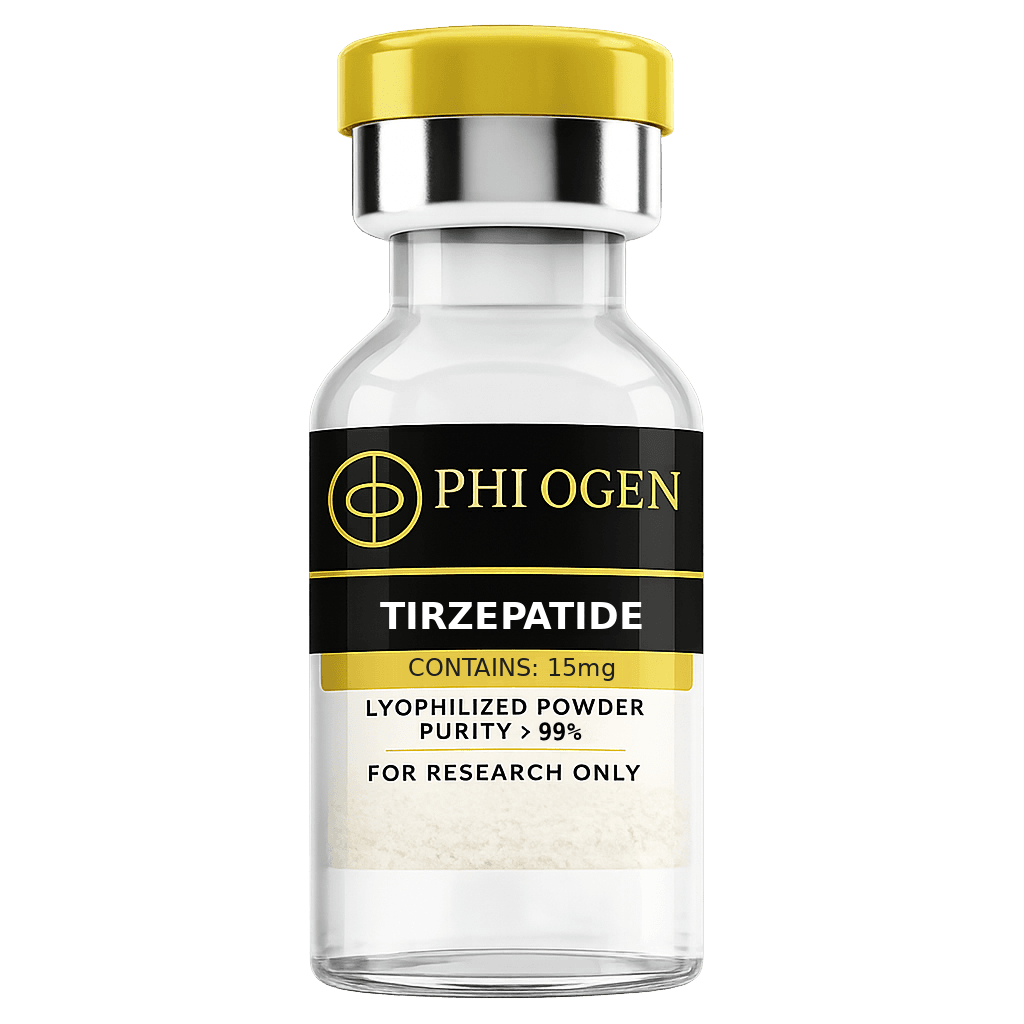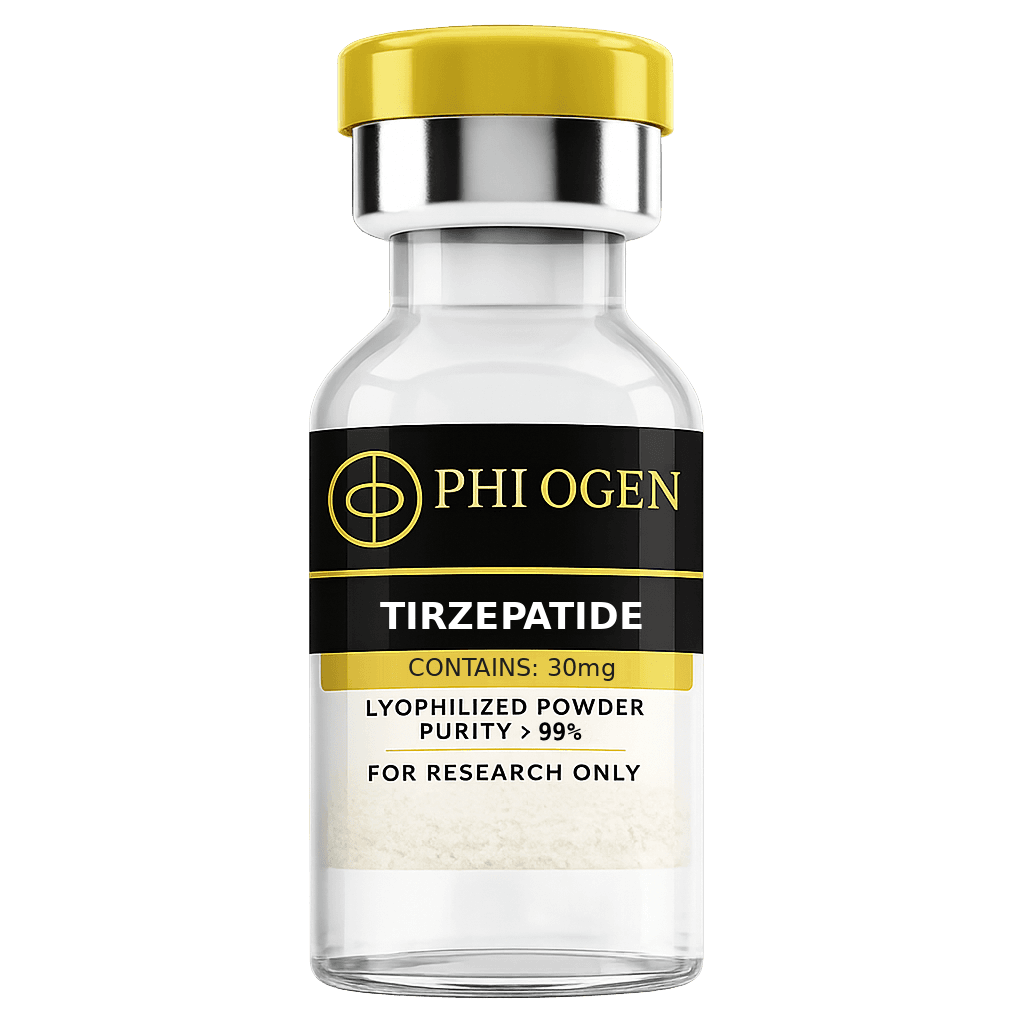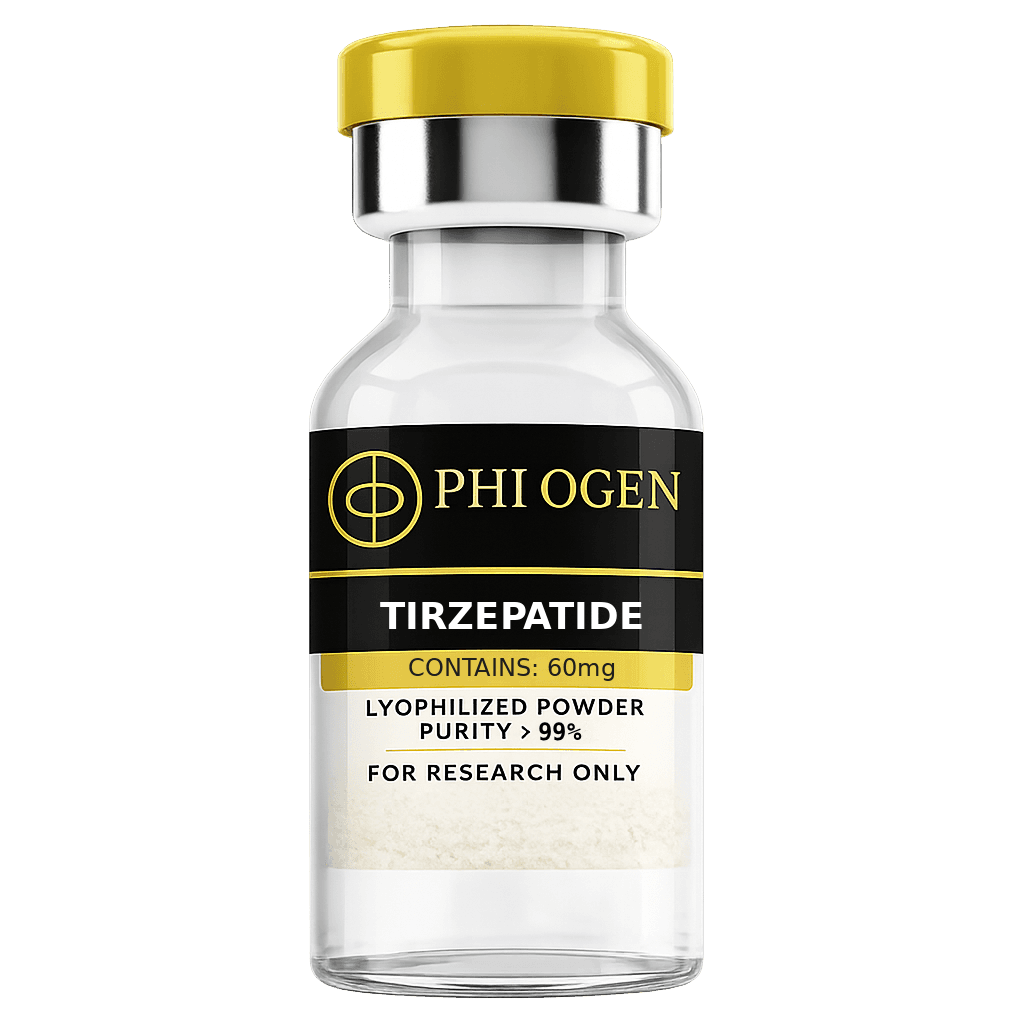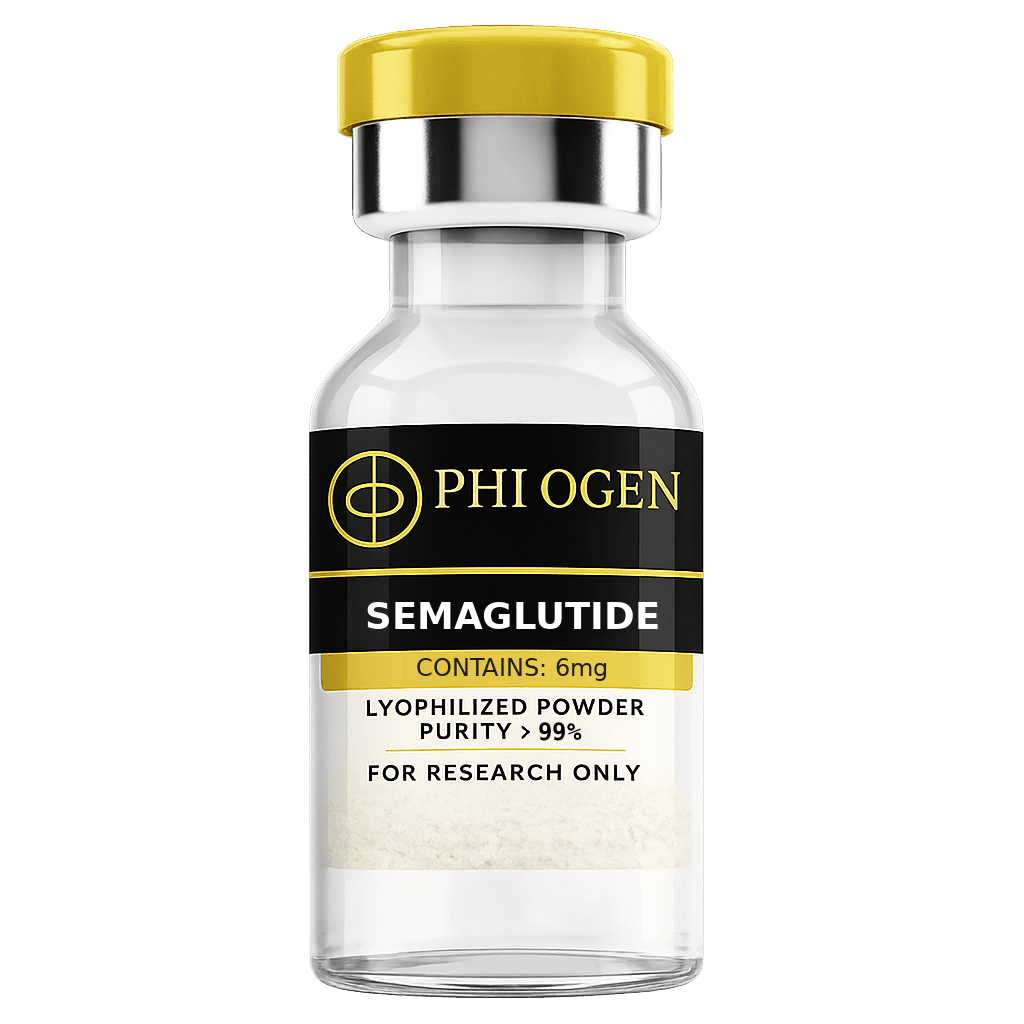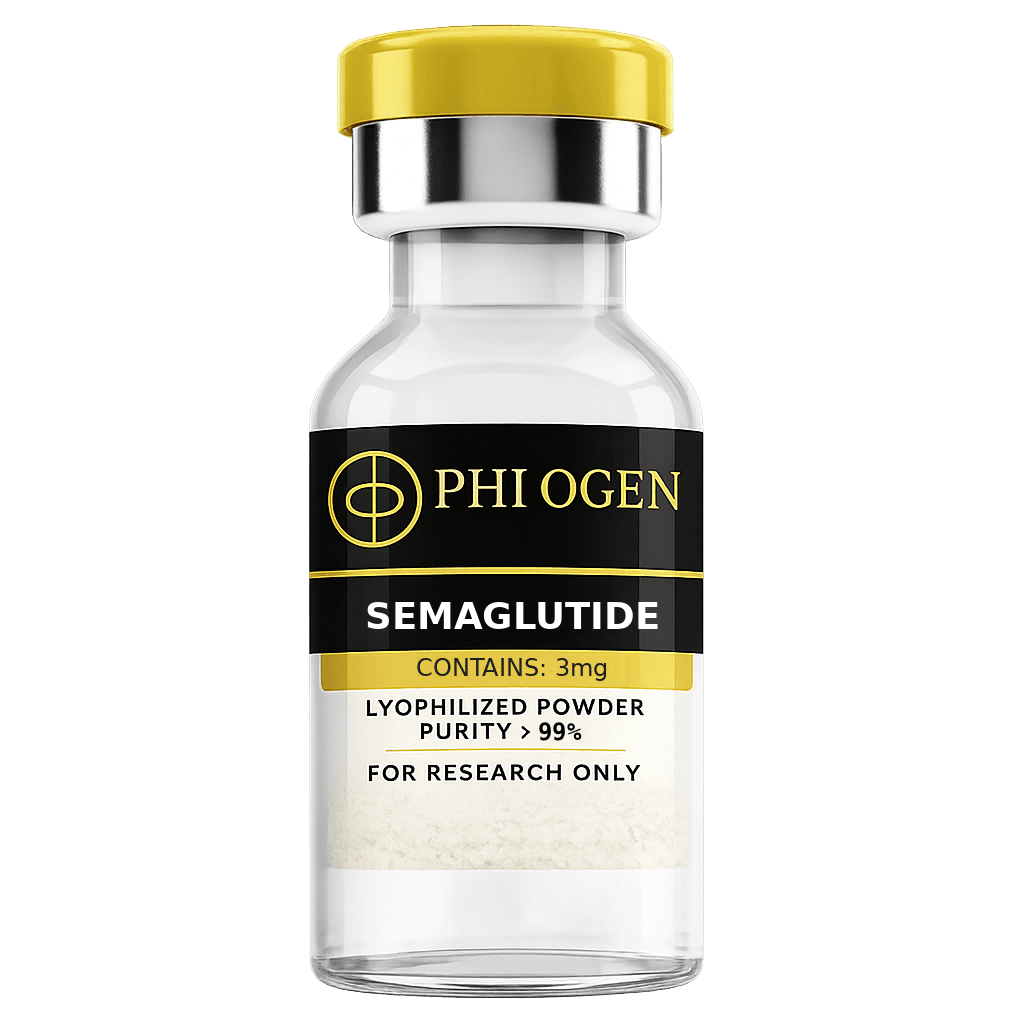
Semaglutide 3mg
Metabolic support for body recomposition research.
Semaglutide is a long-acting GLP-1 receptor agonist that has become one of the most discussed compounds in incretin biology. In research settings, it is used to study energy balance, gastric emptying, and the central-nervous-system effects of GLP-1 pathway activation.
Proposed mechanism
GLP-1 receptor agonism increases glucose-dependent insulin secretion, slows gastric emptying, and acts centrally on appetite-regulating nuclei in the hypothalamus. Semaglutide is engineered with a fatty-acid side chain that extends its half-life to roughly one week in animal studies.
Research highlights
- GLP-1 analog with extended half-life (~7 days in research)
- Featured across metabolic, cardiovascular, and neurological research models
- Slower titration schedules are used in protocols to manage known GI-tolerance endpoints
- Benchmarked in the literature against tirzepatide, retatrutide, and cagrilintide
Research protocol notes
Most research protocols reconstitute semaglutide in bacteriostatic water and administer once weekly. Titration schedules that begin at a low concentration and scale over several weeks are common to study tolerability endpoints.
Stacking and comparative studies
Cagri-sema (cagrilintide + semaglutide) is a frequently studied dual-incretin/amylin combination. Tirzepatide and retatrutide are distinct compounds often compared against semaglutide in head-to-head metabolic research.
Handling and storage
Lyophilized powder is stable at ambient shipping temperatures. Once reconstituted with bacteriostatic water, store at 2–8 °C and use within 28 days. For long-term storage of unreconstituted vials, freeze at −20 °C and protect from light.
Frequently asked
Is semaglutide the same as Ozempic or Wegovy?
Those are commercial pharmaceutical formulations of semaglutide. Research-grade material sold here is for laboratory use only and is not a substitute for a prescribed product.
What is the difference between semaglutide and tirzepatide in research?
Semaglutide is a GLP-1 agonist. Tirzepatide is a dual GIP/GLP-1 agonist — it activates two incretin receptors. Retatrutide adds a glucagon receptor, making it a triple agonist.
Why does it come in multiple vial sizes?
Research protocols vary widely in concentration and duration. Larger vials (20–30 mg) reduce per-mg cost for long-running studies; smaller vials are used for short pilots.
Is a COA provided?
Yes — each lot is independently tested. Request the matching document from the supplier.