
Peptides for Fat Loss: GLP-1, GIP, and Beyond
The peptide fat-loss space has exploded. What used to be a single-drug conversation (semaglutide) is now a receptor-coverage arms race — dual agonists, triple agonists, and combinations with amylin analogs. Here's how the major players compare.
Semaglutide: the GLP-1 benchmark
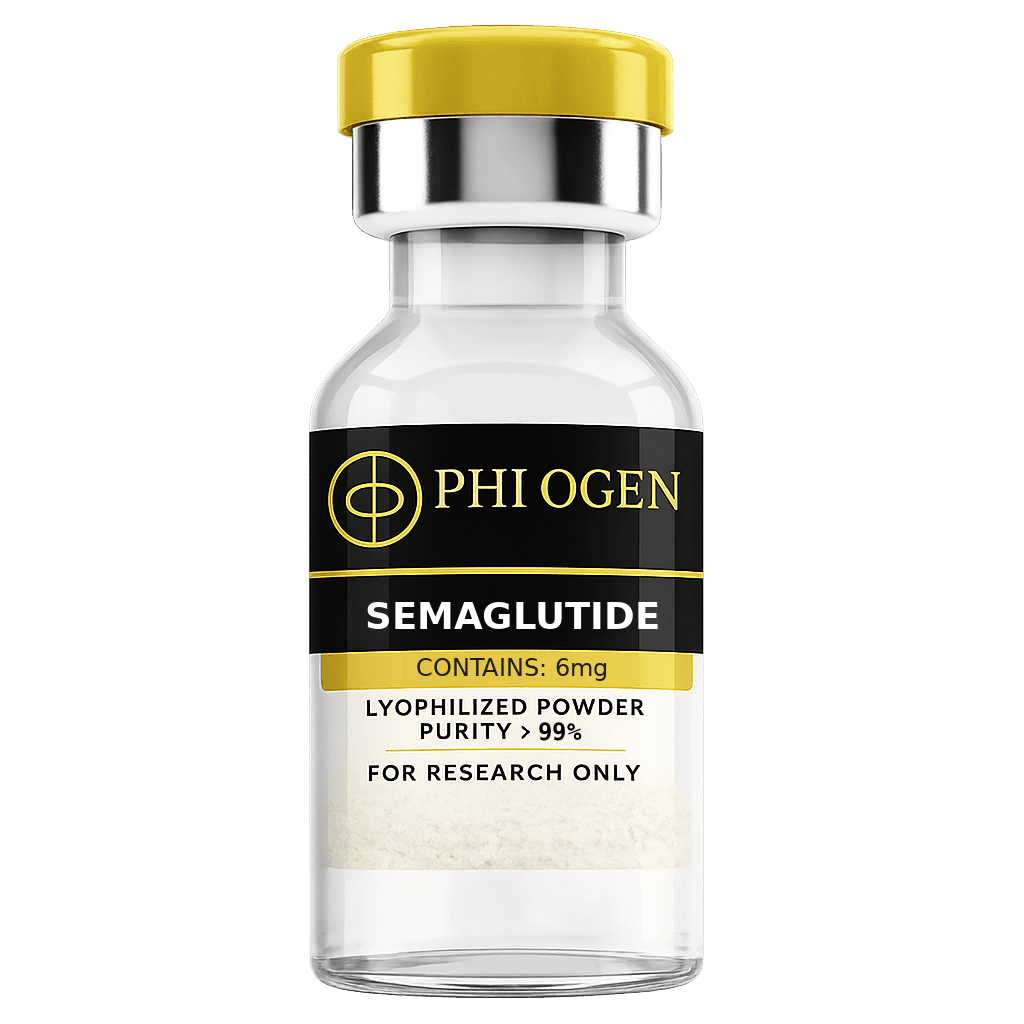
Semaglutide is a long-acting GLP-1 receptor agonist with an engineered fatty-acid side chain that extends its half-life to about a week. It's the compound that put the whole GLP-1 class on the map. Research models consistently show reduced appetite, slower gastric emptying, and glucose-dependent insulin release. In the catalogue it comes in 3, 6, 12, 20, and 30 mg vials — choose based on how long your protocol runs and your target concentration.
Tirzepatide: dual GIP + GLP-1
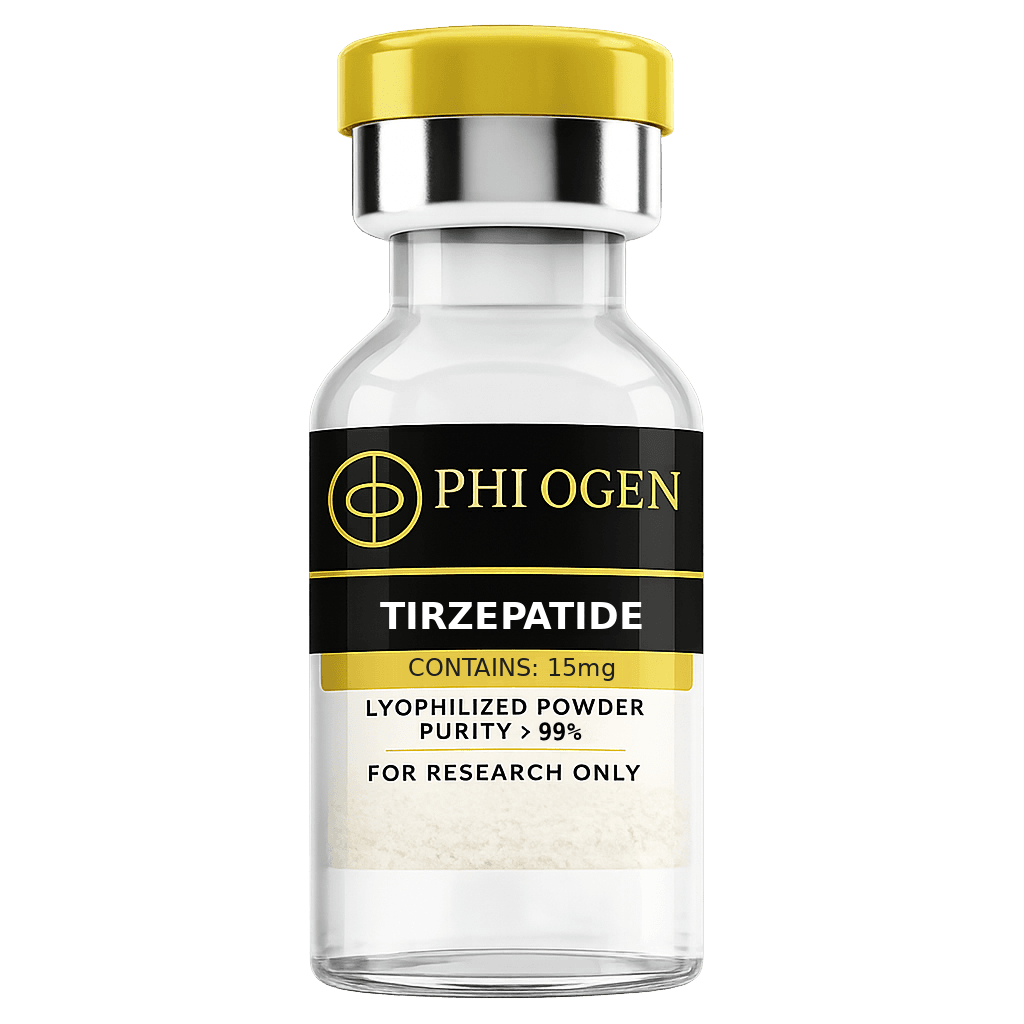
Tirzepatide activates both the GLP-1 and GIP receptors. GIP is a second incretin hormone that enhances insulin release and affects adipocyte function. The dual mechanism is the reason research reports stronger metabolic endpoints at lower GLP-1-driven GI burden. Weekly dosing, like semaglutide. Available in 15, 30, and 60 mg research vials.
Retatrutide: triple agonist
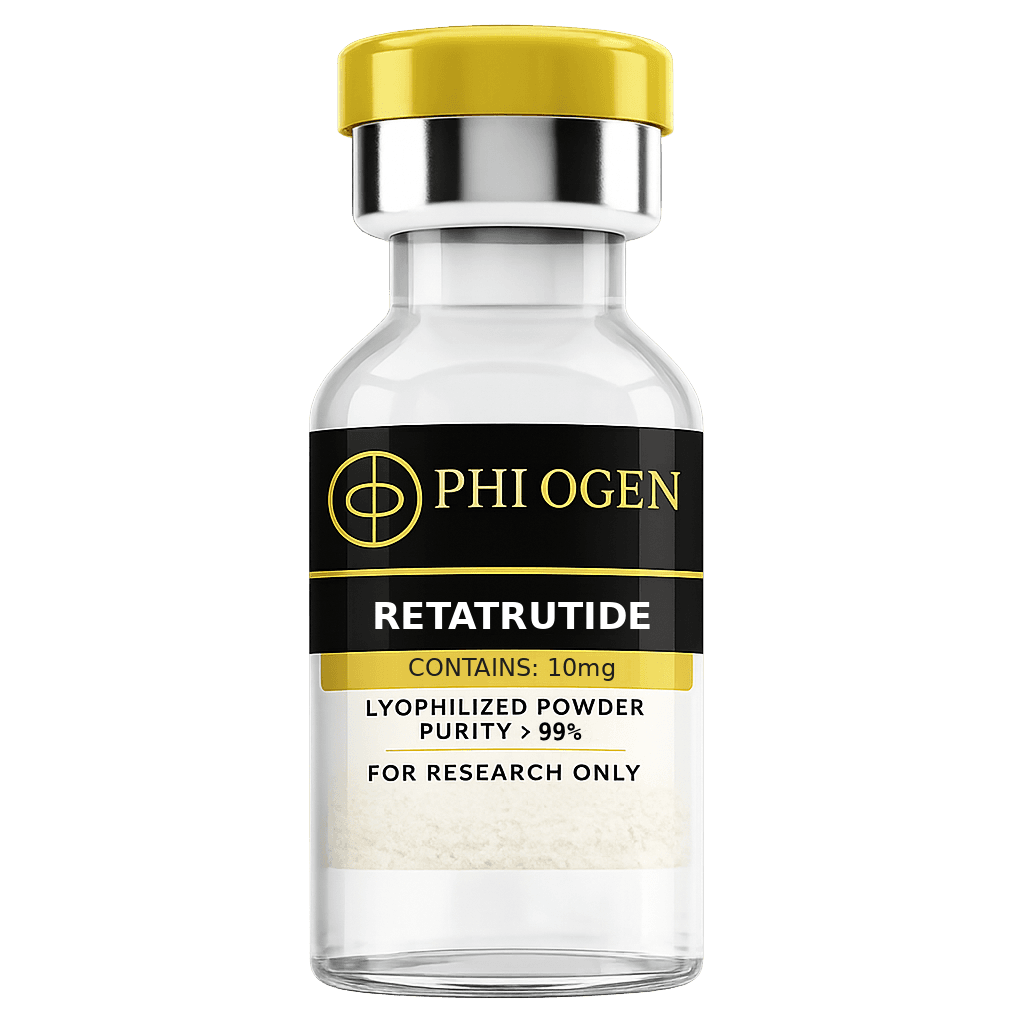
Retatrutide goes one further: GLP-1 + GIP + glucagon receptor. The glucagon-receptor addition brings an energy-expenditure component on top of the appetite and insulinotropic effects of the incretin pathways. In early research comparisons, the broader receptor coverage produces larger effect sizes than tirzepatide in many models. Available in 10, 15, 20, and 30 mg vials.
Cagrilintide: the amylin co-agonist
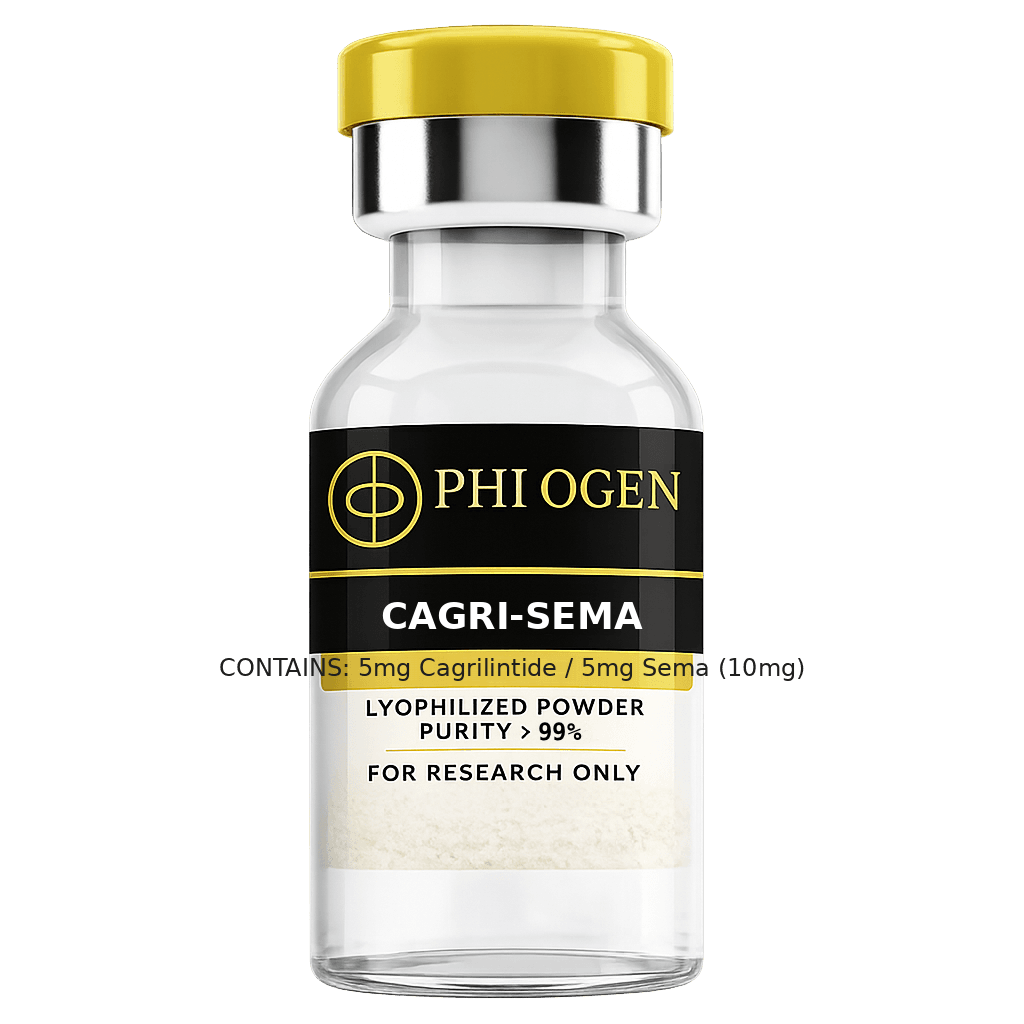
Cagrilintide is a long-acting amylin analog. Amylin is co-secreted with insulin and has separate satiety and gastric-emptying effects from GLP-1. On its own, cagrilintide has modest effects. In combination with GLP-1 class compounds, it produces additive endpoints. That's the logic behind the pre-blended stacks:
- Cagri-Sema — cagrilintide + semaglutide. Dual satiety pathway.
- Cagri-Reta — cagrilintide + retatrutide. Quad-pathway (amylin + GLP-1 + GIP + glucagon).
Other metabolic compounds worth knowing
5-Amino-1MQ
Not a peptide — a small-molecule NNMT inhibitor. NNMT consumes both nicotinamide (an NAD+ precursor) and SAM (the universal methyl donor). Blocking NNMT raises nicotinamide availability, which is studied in adipocyte and metabolic research. Oral capsules and injectable formats both exist.
AOD9604
A synthetic fragment of human growth hormone (residues 176–191) engineered to keep the lipolytic activity of GH without the growth signaling. Different mechanism from the GLP-1 class — it acts on adipocyte lipolysis rather than central appetite.
AICAR
An AMPK activator studied for its effects on fatty-acid oxidation and glucose uptake. AMPK is sometimes called the cell's "fuel gauge" — activating it mimics a low-energy state.
Tesofensine
A triple monoamine reuptake inhibitor (not a peptide) — affects dopamine, norepinephrine, and serotonin. Studied extensively for appetite suppression in obesity research. Available in capsule and tablet formats.
SLU-PP-332
An ERR (estrogen-related receptor) agonist studied as an exercise-mimetic — the idea being that ERR activation reproduces some of the mitochondrial-biogenesis and fatty-acid-oxidation effects of training.
Survodutide and mazdutide
Two newer entries. Survodutide is a dual GLP-1 / glucagon receptor agonist — similar to retatrutide but without GIP. Mazdutide is another dual GLP-1 / glucagon agonist being developed out of the Chinese research pipeline. Both belong to the dual-agonist lane alongside tirzepatide, with a different receptor pair.
How to think about which one fits
- Benchmark research — semaglutide. Largest published literature.
- Stronger endpoints, same class — tirzepatide (dual) or retatrutide (triple).
- Combination research — Cagri-Sema or Cagri-Reta pre-blends.
- Non-GLP-1 mechanism — 5-Amino-1MQ, AOD9604, AICAR.
- Monoamine route — tesofensine (capsule or tablet).
Titration, tolerance, and protocol notes
GLP-1-class compounds are almost universally titrated in research — starting at a low concentration and scaling up over 4–8 weeks. This is because the GI-related endpoints (nausea, slowed gastric emptying) are dose-dependent. Weekly dosing is standard across the class. Reconstitute in bacteriostatic water, aliquot, and refrigerate.
Research-use notice
These compounds are not substitutes for prescribed medications. Every vial sold through Tidemaxxing is for laboratory research use only. Nothing here is medical advice.
Featured compounds
Related reading
Every compound referenced on this page is indexed in the catalogue with per-batch COAs and direct purchase links.
Open the catalogue →