
Semaglutide vs Tirzepatide vs Retatrutide
Three generations of the same idea, each adding more receptors. Semaglutide activates one receptor. Tirzepatide activates two. Retatrutide activates three. Here's the detailed comparison.
Receptor coverage at a glance
- Semaglutide: GLP-1 only.
- Tirzepatide: GLP-1 + GIP (dual agonist).
- Retatrutide: GLP-1 + GIP + glucagon (triple agonist).
Semaglutide: the GLP-1 benchmark
Semaglutide put the whole GLP-1 class on the map. It's a long-acting GLP-1 receptor agonist with an engineered fatty-acid side chain that extends its half-life to roughly seven days — enabling once-weekly research dosing. GLP-1 receptor activation slows gastric emptying, enhances glucose-dependent insulin secretion, and engages central appetite-regulation pathways in the hypothalamus.
Research sizes: 3, 6, 12, 20, 30 mg. Research protocols almost universally titrate — starting low and scaling up over 4–8 weeks because GI-related endpoints scale with dose.
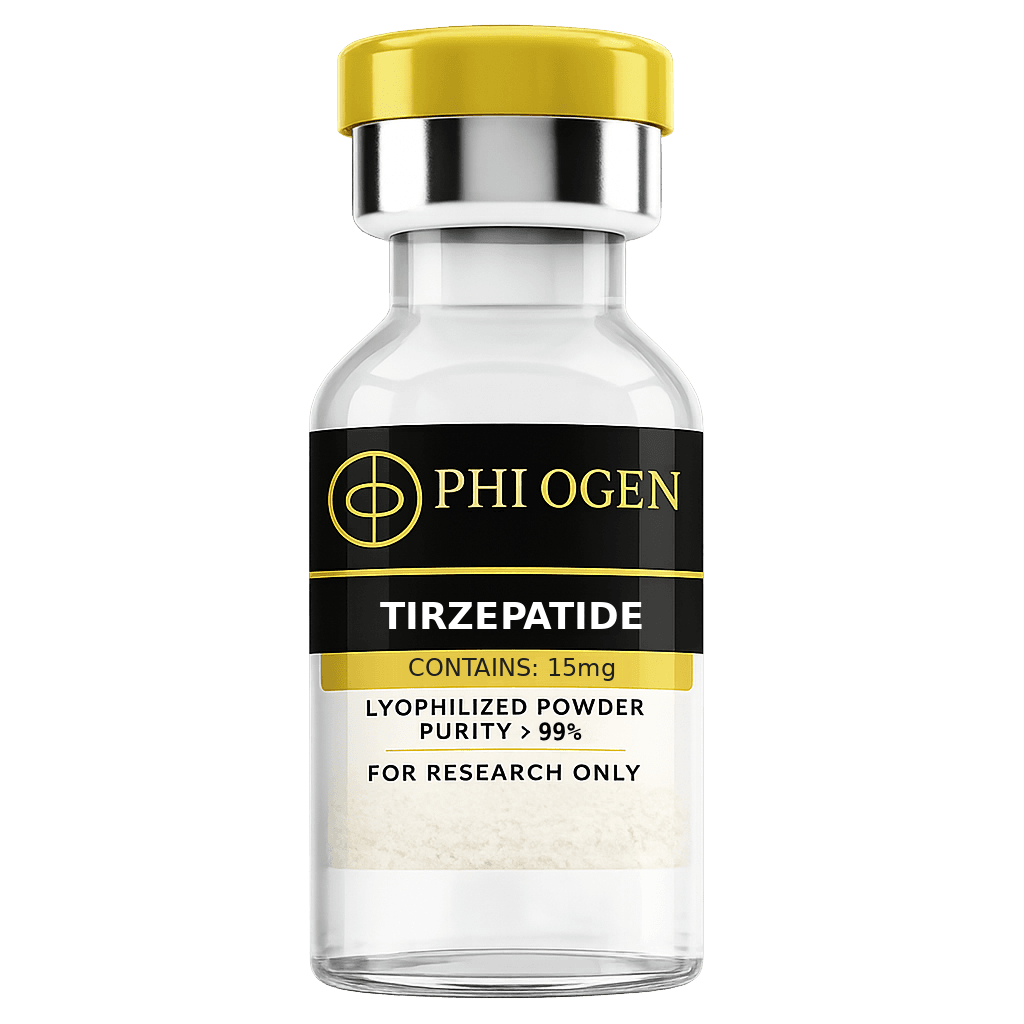
Tirzepatide: adding GIP
Tirzepatide activates both the GLP-1 and GIP receptors. GIP (glucose-dependent insulinotropic polypeptide) is a second incretin hormone. On its own, GIP has relatively modest effects — but combined with GLP-1 receptor activation, the dual signal produces stronger metabolic endpoints than GLP-1 alone.
The clinical/research question with tirzepatide has always been: does the GIP component contribute independent benefit, or does it just amplify GLP-1 signaling? Published research suggests both are happening — distinct and additive effects.
Research sizes: 15, 30, 60 mg. Weekly dosing. Titration schedules comparable to semaglutide.
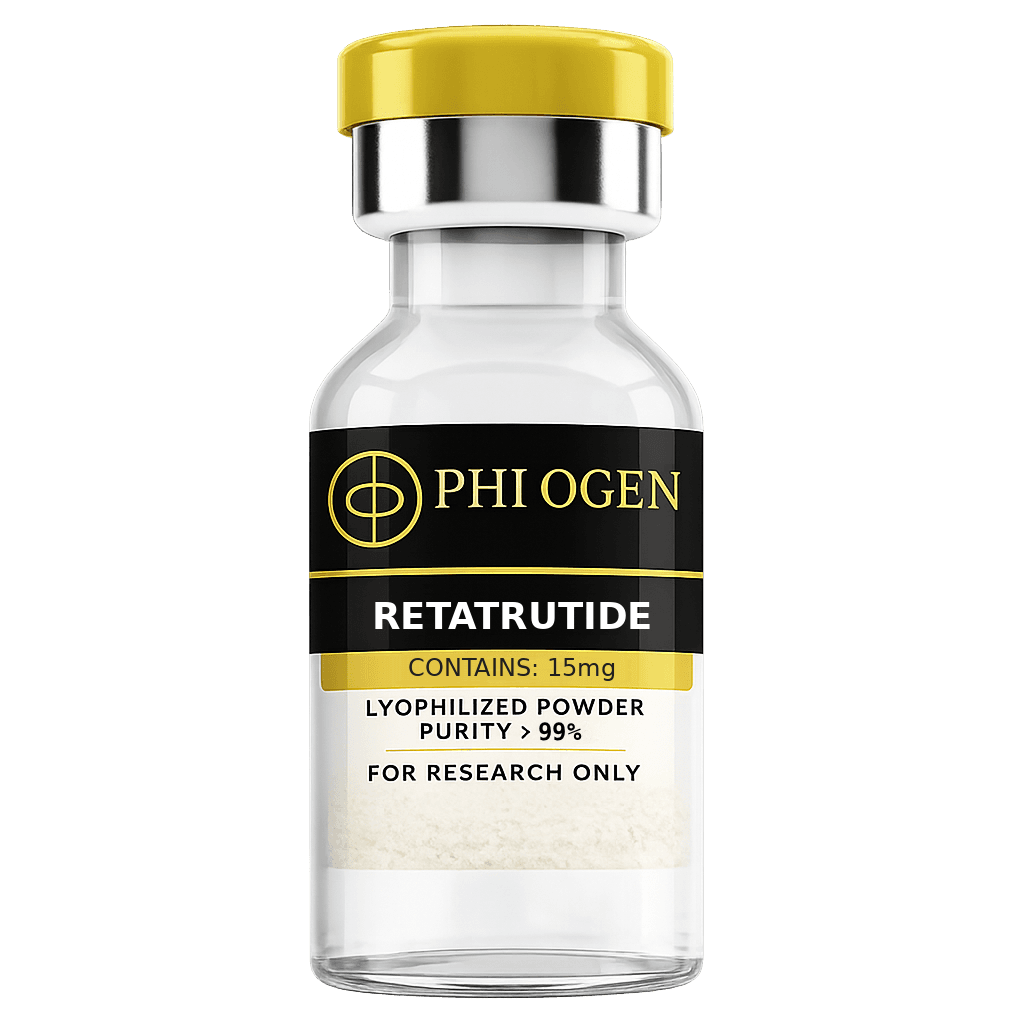
Retatrutide: adding glucagon
Retatrutide goes further: GLP-1 + GIP + glucagon receptor. The glucagon receptor addition is mechanistically interesting because glucagon has opposite effects to insulin in certain tissues — raising glucose production but also increasing energy expenditure. The triple-agonist design balances these effects to produce stronger overall metabolic endpoints than either single or dual agonists.
Research sizes: 10, 15, 20, 30 mg. Weekly dosing.
Direct research comparisons
In head-to-head research models:
- Tirzepatide produces larger weight-loss endpoints than semaglutide at comparable doses.
- Retatrutide produces larger endpoints than tirzepatide in early research.
- Tolerance endpoints (GI effects) scale roughly with efficacy — more receptor coverage typically means more tolerability work in protocol design.
Where do cagrilintide stacks fit?
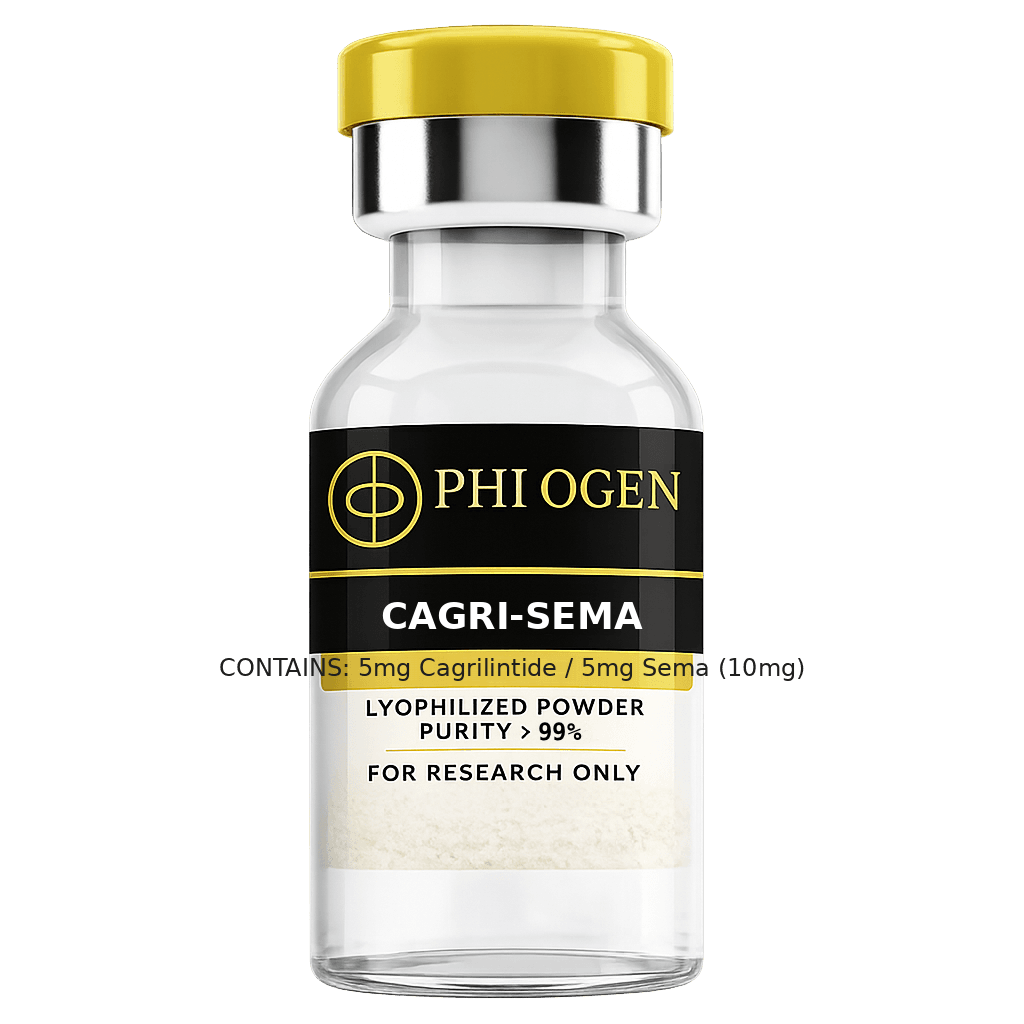
Cagrilintide is a long-acting amylin analog — a completely different receptor system. Amylin is co-secreted with insulin and regulates satiety and gastric emptying through its own pathway. Combining cagrilintide with a GLP-1-class compound adds a fourth receptor to the stack:
- Cagri-Sema — cagrilintide + semaglutide. Amylin + GLP-1.
- Cagri-Reta — cagrilintide + retatrutide. Amylin + GLP-1 + GIP + glucagon.
Cagri-Reta represents the broadest receptor coverage available in the current pre-blended research stacks.
Survodutide and mazdutide
Two dual agonists in a different pair than tirzepatide:
Survodutide
GLP-1 + glucagon (no GIP). A different take on the dual-agonist idea.
Mazdutide
GLP-1 + glucagon, developed from Chinese research pipelines.
Which one fits which research question?
- Baseline GLP-1 biology — semaglutide. Largest literature to compare against.
- Dual-agonist research — tirzepatide (GIP) or survodutide/mazdutide (glucagon).
- Triple-agonist research — retatrutide.
- Quad receptor coverage — Cagri-Reta.
Practical protocol notes
Weekly dosing is standard across the class. Reconstitute in bacteriostatic water to the target concentration — higher dilutions for smaller research doses, more concentrated for larger. Aliquot before freezing. Reconstituted vials keep ~28 days refrigerated.
Research-use notice
These compounds are not substitutes for prescribed pharmaceuticals. Every vial sold through Tidemaxxing is for laboratory research only. Nothing on this page is medical advice.
Featured compounds

Related reading
Every compound referenced on this page is indexed in the catalogue with per-batch COAs and direct purchase links.
Open the catalogue →